Respectus Philologicus eISSN 2335-2388
2026, no. 50 (55), pp. 71–85 DOI: http://doi.org/10.15388/RESPECTUS.2026.50.6
Intermedial Metalepsis in American Travel Writing on the Soviet Union in the 1930s
Olena Yufereva
Kyiv National University of Technologies and Design
Mala Shyianovska (Nemyrovycha-Danchenka) Str. 2, Kyiv, Ukraine
Email: elena.yufereva@gmail.com
ORCID iD: https://orcid.org/0000-0003-4700-8002
Research interests: travel writing, peripheral phenomena in literature, intermedia studies
Abstract. This article examines metalepsis in non-fiction through the lens of multimodal travel writing. Combining narratological, intermedial, comparative, and discourse-historical approaches, this analysis investigates the travelogues of Will Rogers and Jay Norwood Darling, based on journeys to the Soviet Union in the 1930s. The study demonstrates that humorous and caricatural strategies not only destabilise the boundary between fact and fiction but also reinforce documentary credibility. In Rogers’s text, metalepsis operates through the playful mediation of the cowboy persona and satirical illustration; in Darling’s, it assumes a tragic mode, exposing contradictions within Soviet ideology. Taken together, these case studies reveal that intermedial metalepsis in non-fiction dismantles the illusion of unmediated truth while reaffirming referential authority. The article contributes to narratological debates on metalepsis and advances understanding of the functions of humour, irony, and satire in politically engaged travel writing.
Keywords: metalepsis; non-fiction; narrative; travel writing; caricature.
Submitted 13 November 2025 / Accepted 15 May 2026
Įteikta 2025 11 13 / Priimta 2026 05 15
Copyright © 2026 Olena Yufereva. Published by Vilnius University Press. This is an Open Access article distributed under the terms of the Creative Commons Attribution License CC BY 4.0, which permits unrestricted use, distribution, and reproduction in any medium provided the original author and source are credited.
Introduction
Scholars have long associated metalepsis with fictional and experimental narratives; however, its role in non-fiction literature remains underexplored. In travel writing, especially in its multimodal forms, narration often destabilises the boundary between factual reporting and imaginative reconstruction. Critical discussion of factual storytelling has tended to emphasise homodiegetic narration. However, in non-fiction, the very structure of storytelling frequently generates tension between the narrator and the figures described. These gaps stem from the genre’s inherent paradox: a simultaneous demand for authenticity and a reliance on fictional techniques. For instance, iconic elements in documentary texts verify geographical and ethnosocial realities. At the same time, as several studies suggest, these elements also release an imaginative potential that broadens the diegetic space.
The guiding question is how humour and satirical graphic forms, especially caricature and cartoon, which simplify and exaggerate their subjects, reshape the fictional and non-fictional dimensions of travel writing while still documenting historical reality. Humorous – particularly caricatural – intentions sit uneasily within a politically charged travelogue. As Robin Jarvis (2023) observes, the relationship between humour and travel writing has historically been uneasy: humour compromised seriousness and weakened the authority of the traveller as a researcher, a discoverer, and a witness to new worlds. However, when aimed at the excesses of the imaginary, satire, parody, and their visual forms also address urgent social and political concerns.
This tension is evident in the travelogues There’s Not a Bathing Suit in Russia and Other Bare Facts (1927) by Will Rogers and Ding Goes to Russia (1932) by Jay Norwood Darling, both based on their journeys to the Soviet Union. Six years separate their trips – a period marked by significant shifts in Soviet politics – yet their perceptions of what they saw often converge. Both treat Soviet realities with irony and satire, reinforced by humorous illustrations. Their primary aim, however, was to convey the truth to American readers. Many had already been swayed by glowing reports of Soviet achievements – accounts that seemed especially persuasive against the grim backdrop of the US economic crisis of the 1930s. A heterodiegetic narrator frames their analytical approach while engaging with other narrative instances, weaving the authors’ encounters with the Soviet ‘Other’ into the text. The notion of factuality becomes more complex when the I-figure emerges alongside the narrator and is transposed into a semiotic mode of reduced iconicity.
The present article, therefore, aims to identify strategies of metalepsis in both self-presentation and the representation of Soviet realities within politically charged intermedial travelogues. At the heart of these narratives lies a deconstruction of the illusory image of the new state through the interplay of the real, the imaginary, and the fictional.
The multidimensional methodological synthesis employed here integrates several complementary approaches. Narratological analysis, in conjunction with the social semiotics of Kress and van Leeuwen, provides the basis for identifying metaleptic shifts and examining how they operate across text and image. This multimodal dimension is thus directly tied to the detection of metalepsis as a transgression between representational levels. A comparative reading of Will Rogers’s and Jay Norwood Darling’s travelogues serves a distinct function: it highlights their differing strategies of humour and satire as both textual and visual phenomena in constructing the “Soviet Other.” These analytical layers are then situated within a discourse-historical framework, which interprets metaleptic techniques in relation to the broader cultural and political tensions of the 1930s. Such an integrated approach demonstrates how metalepsis in non-fiction negotiates between referential authority and ideological critique.
This inquiry examines a selective corpus of illustrations, prioritising caricatures that incorporate a fictionalising and self-referential dimension. These images enter into a dynamic relation with the verbal narrative, producing a metaleptic effect. Such visual instances predominate in the travelogues under study and constitute a defining feature of the material, foregrounding the interplay between factual reference and imaginative transformation.
1. Formulating the hypothesis of metalepsis in non-fiction
The multilayered structure of travelogues – and documentary literature more broadly – becomes especially visible once caricature enters the picture. At this point, the concept of metalepsis proves particularly useful. Gérard Genette (1980, p. 236) originally described metalepsis as a crossing between the world in which narration occurs and the world that is narrated. In more recent scholarship, however, the term has come to mean something broader: a mode of artistic thinking that deliberately unsettles illusions, boundaries, and conventions (Evans, 2018; Lutas, 2021).
Studies over the past two decades have shown that the theoretical scope of metalepsis has expanded significantly beyond its original definition. Scholars typically distinguish between two levels of boundary-crossing in fiction: narrative worlds and narrative voices. Marie-Laure Ryan (2013, p. 135) describes it as “when an entity belonging to one level migrates to another, where it does not belong.” In a similar vein, Werner Wolf (2009, p. 84) calls it a “paradoxical transgression between ontological levels.” Jan Thoss (2011, p. 90) pushes the idea further by naming three distinct types: crossing between the storyworld and another imaginative world, between the story world and reality, and between story and discourse.
Metalepsis is often described through metaphors of rupture and paradox. However, the gaps it opens are never empty: they generate meaning, often in ways that unsettle the reader. Wolf’s (1993, p. 356) memorable phrase, a “sudden collapse of the narrative system,” resonates with Douglas Hofstadter’s notion (2007, p. 18) of a “strange loop”: the movement up or down through hierarchical levels that unexpectedly returns to its starting point. Scholars typically speak of ascending metalepsis, when fictional characters cross into the author’s world, and descending metalepsis, when the author or narrator enters the fictional domain. Thus, much of the debate has focused on distinctions such as rhetorical and ontological metalepsis, as well as on different directions and forms of boundary-crossing (Fludernik, 2003; Alber, 2009; Alber and Bell, 2012; Kukkonen, 2011; Saint-Gelais, 2011; Re, 2017). Despite these variations, metalepsis consistently involves a violation of hierarchical distinctions that produces reflexive or anti-illusionist effects.
In this article, metalepsis is identified according to the following criteria: a transgression between narrative levels or between the factual and the fictional; a shift of the narrator or represented figures across these levels, including their visual reconfiguration; an interaction between verbal and visual modes that produces a dissonance between factual reference and imaginative projection; and a resulting anti-illusionist or reflexive effect that exposes the constructedness of representation. Accordingly, metalepsis is distinguished here from other reflexive or ironic devices by its specific mechanism: the crossing of ontological or representational levels.
The case of non-fiction presents a particular challenge. In documentary discourse, the narrator’s voice is usually anchored in a stable referential zone and cannot move freely. Ontologically, documentary narrative seems unable to create alternative worlds. For this reason, many theorists limit metalepsis to fiction. However, even in factual texts, such as travelogues, the distance between the narrator and the world is not fixed. Shifting from a heterodiegetic narrator to an intradiegetic participant can generate various effects, including metalepsis.
Although relatively little scholarship exists on this topic, the available work suggests that autobiographical texts often employ metalepsis, a literary device also found in fiction. However, as studies of autobiographical and documentary narratives suggest, boundary-crossing effects can also emerge in factual discourse, where they disrupt and simultaneously reinforce the “effect of truth” (Smith and Watson, 2019).
The central hypothesis of this article is that the paradox of metalepsis in non-fiction lies in its ability to fictionalise – and thereby to dismantle illusions and stereotypes. Alongside this, metalepsis of self-presentation, as when an extradiegetic narrator slips into an intradiegetic role, creates an imaginative “zone of contact.” By fictionalising the travel narrative in this way, the text invites the reader to step across the boundary of detachment and to experience greater proximity to the narrator in confronting the represented world.
This situation can be described as transnarrative, as boundary-crossing operates across word and image (Feyersinger, 2010; Lutas, 2021; Mikkonen, 2017; Mohlmann, 2025; Pier, 2016; Thoss, 2015). While caricatures are recognised as tools for representing historical reality (Kleeman, 2006; Dodds, 2010), in the travelogues under discussion, the visual is mediated through the verbal narrative, adding its own expressive layer. Their key point of contact is the metaleptic shift, in which description assumes a caricatural form. This transmedial metalepsis disrupts the illusion of reality by exposing its constructedness and foregrounding the discourse’s ideological underpinnings, creating an intensified space for readerly engagement.
2. Metalepsis, fictionality, and humour in Rogers’s travel narrative
The visual dimension of the travelogues by Rogers and Darling reveals one crucial difference. Darling, being a cartoonist, produced his own illustrations. Rogers, by contrast, collaborated with the illustrator and political cartoonist Herb Roth, whose creative strategy focused on amplifying the most satirical moments of the travelogue. This choice shaped the presentation of the narrator-character in important ways. In Rogers’s case, his persona – the cowboy – appears in nearly every caricature, with only a few exceptions. The narrator’s visibility in the visual layer gives rise to two forms of metalepsis: rhetorical and ontological.
The rhetorical dimension emerges clearly in the verbal narrative. Rogers’s homodiegetic narrator is marked by strong intradiegetic traits, which reduce the descriptive detachment often associated with travel writing. Instead of remaining a distant yet attentive observer – as is more characteristic of Darling – Rogers’s narrator voices personal desires, engages with the Soviet landscape, and recounts his experiences from an active, situated perspective. Drawing on his journalistic background, he consistently appeals to the implicit reader, shifting his narrative position from I to you:
- -
Everywhere you go – every room in every public building has a bust of Lenin. They make the children speak of him as Uncle Lenin. Now, it’s always best to let the people pick out their own Heroes. Don’t try to force one on them; it’s liable to have the opposite effect sometimes (Rogers, 1927, p. 152).
- -
This dialogue with the reader rests on a shared lack of familiarity with Russia: “we don’t know or have any idea what it is like” (Rogers, 1927, p. 72). As a result, the questions the traveller pursues in Soviet reality often seem to be posed by the reader. Descriptions, explanations, and historical digressions shift the narrative into a heterodiegetic register, restoring an objective distance: “Now the main question that I know strikes you is, Has Russia changed much and is it better off? Say, that is the one answer you can go and bet on. Russia hasn’t changed one bit” (Rogers, 1927, p. 140).
The ontological dimension of metalepsis is tied to extratextual factors. Rogers was widely known and loved in the United States as both a comedian and a journalist, his persona firmly anchored in the cowboy role. This public image, still debated today, particularly in postcolonial discussions of his Native American heritage (Velikova, 2007; Ware, 2009), explains why the cowboy appears so prominently in the illustrations, even though the verbal travelogue does not similarly foreground him. The metaleptic crossing that transforms the narrator into a visual character entails a shift in semiotic code. Its chief function is to create humour, amplifying the playful modality of the text and reinforcing one of its recurrent themes: the lack of humour in Soviet society.
Caricatural portraits of the narrator and depictions of historical figures, such as Trotsky, illustrate how this metaleptic shift operates. Caricature’s reduction makes it particularly suited to conveying emotion and action, producing a humorous effect that reinforces the travelogue’s playful tone. Caricature absorbs what remains unsaid, improbable, or openly invented, revealing the traveller’s perception of the Soviet world.
Encounters between the cowboy character and Soviet citizens in Roth’s caricatures intensify the sense of otherness for the American reader. Discrepancies between the verbal and visual layers generate additional diegetic episodes. Through self-irony, the narrator underscores the absurdity of situations – such as his attempt to “blend in” by growing a beard (Fig. 1). In the illustrations, this gesture turns into farce: the beard highlights, rather than conceals, his foreignness, as grotesquely archaic figures scrutinise the awkwardly smiling stranger. Caricature thus collides the imaginary with the real, exposing the futility of the traveller’s attempts to bridge cultural distance. In the multimodal text, the metaleptic from a homodiegetic narrator sharing personal experience to a heterodiegetic perspective that exposes and ridicules the naïveté of the narrator-character.
The representation of fictionalised encounters with the Soviet Other functions as a metafictional device. One striking example is the “non-encounter” with Trotsky, whom the traveller seeks to meet “to find out what kind of a man he was personally” (Rogers, 1927, p. 90). The narrator encounters a bureaucratic refusal, justified by the claim that “the government has no time for fun and laughter,” an implicit reference to Rogers’s public persona. Where the verbal account ends in disappointment, the caricature continues the narrative, transforming refusal into a fictional meeting. Trotsky reappears as a comedian, a double of Rogers, fulfilling the narrator’s desire to glimpse the human side of a political figure (Fig. 2).
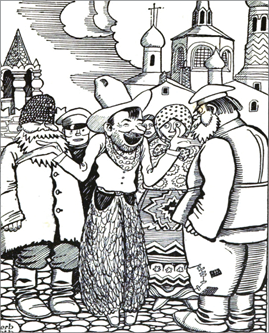
Fig. 1. Illustration by Herb Roth for Will Rogers’s travelogue There’s Not a Bathing Suit in Russia. Source: Rogers (1927, p. 75).
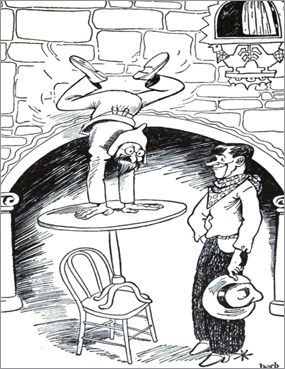
Fig. 2. Illustration by Herb Roth for Will Rogers’s travelogue There’s Not a Bathing Suit in Russia. Source: Rogers (1927, p. 91)
The composition of the caricature reinforces parody by juxtaposing two comedians – one real, the other imagined – each rooted in a distinct world. Yet the narrative soon returns to a more conventional register, with solemn intonations that redirect the reader’s attention to political realities: the impossibility of the meeting, shaped by Trotsky’s persecution and eventual exile. The episode thus points to broader themes of repression and the silencing of facts, which Rogers’s travelogue acknowledges carefully but persistently.
Caricatures also counter stereotypes, rumours, the traveller’s experience, and the imagined world, raising doubts and political questions. Ironically, Rogers insists that, contrary to widespread warnings, no one was watching him: “nobody was following me and nobody paid any attention.” In doing so, he explicitly rejects the rumour of constant GPU surveillance of foreigners. However, this confident statement quickly breaks off with an admission of self-censorship: he remained careful in his jokes, aware that he wanted to return home as peacefully as he had arrived – “I looked, I absorbed, but I didn’t utter” (Rogers, 1927, p. 86). Thus, the narrator feels unsafe and avoids indiscretion, even in the absence of visible spies (Fig. 3).
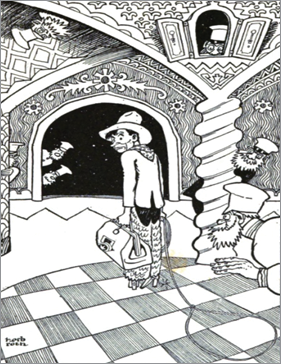
Fig. 3. Illustration by Herb Roth for Will Rogers’s travelogue There’s Not a Bathing Suit in Russia. Source: Rogers (1927, p. 83)
The caricatures, however, offer a paradoxical twist. They ridicule the verbal denial by showing a cowboy trailed by archaic-looking spies lurking in every corner. The effect is both phantasmagoric and comic. Unlike in other illustrations, here the cowboy does not smile. His tense posture and nervous glances reflect the emotional reality of a traveller in an alien environment, where humour carries risk. The “half-frightened comedian” emerges as a visual counterpart to the narrator, embodying his unease in a way the verbal text only cautiously hints at.
Readerly engagement intensifies through this paradoxical interplay of humour, fictionality, and the semiotically recoded image of the empirical narrator. The visual layer provided by H. Roth enhances the comic tone and introduces an additional level of metafictionality. The coexistence of rhetorical and ontological metalepsis creates a double illusion through which the reader gains deeper insight into the nature of Soviet reality.
3. The tragic edge of caricature: metalepsis in Darling’s travel writing
Darling’s travelogue, written six years later, offers a broader factual picture of Soviet reality, now marked by collectivisation and industrialisation. At times, the narrator-persona steps into the animated world of caricature to express reactions left unspoken in the verbal text, broadening perception and diversifying the extradiegetic strategy. In cartoon form, he conveys surprise at Soviet hotel service or disgust at Soviet coffee. This autodiegetic figure adds a subjective layer of impressions and emotional colour to an analytical narrative of disillusionment. A similar device appears in Rogers’s text, where the narrator is likewise caricatured and thus transported across diegetic levels.
From the outset, irony frames a sharply critical narrative, more explicit in its judgements of Soviet economics, domestic policy, and propaganda than Rogers’s earlier account. As Darling notes, the regime appears as a contradictory mixture of “grandiose idealism and hard, almost cruel, severity,” marked by a gap between ideological claims and lived reality (Darling, 1932, p. 15). Rogers engages his American readers in a dialogue of questions and answers about an unfamiliar world; Darling, by contrast, seeks to expose the deceptiveness of Soviet propaganda, drawing parallels to American life, history, and hardships that – amid the intensifying Depression – pale in comparison to the difficulties faced by Soviet citizens. His strategy is to approach the political order through its impact on ordinary people, foregrounding individuals and families in situations presented by the regime as evidence of social progress. In this context, metalepsis not only dismantles propaganda’s illusions but also shifts caricature from satire into a more tragic mode of representation.
His verbal narrative repeatedly positions the implicit reader as a foreign traveller in the Soviet Union, with hypothetical thoughts and impressions grounded in the facts already known in the West:
- -
The Russian propaganda you are thinking about is that which they are supposed to be exporting to undermine the capitalistic world outside Russia. You probably haven’t seen any of it, but even if you have, “you ain’t seen nothin” yet. Wait until you see the propaganda the Russians keep for home consumption (Darling, 1932, p. 81).
- -
The narrator’s communicative role is twofold: to present the naïve, propaganda-trusting visitor and simultaneously to maintain the stance of a careful observer who confronts Soviet realities and measures them against proclaimed achievements.
This investigative position is visually reinforced through sketches with a neutral modality and an air of objective distance, featuring urban landscapes, rural scenes, and ethnographic studies. Compared with Rogers’s text, Darling’s drawings appear less conventionalised, partly because he produced them himself. Even background details carry documentary weight. While these non-caricature sketches seem neutral, they convey information beyond the verbal narrative, deepening the traveller’s perspective.
When Darling turns to satire, political decisions are depicted through concrete social phenomena that are paradoxically fused with caricatural images, yielding a sharp political subtext. For the narrator, Soviet monetary policy is not merely inefficient but a mechanism curtailing individual freedom: “The Russian currency and the Russian people must play with each other in their own yard. The fence line of Russian territory is the absolute limit of the activities of either. They are both political prisoners” (Darling, 1932, p. 74).
This statement is visually rendered as a caricature: the ruble, depicted as a chained dog, allegorises money “tied down,” incapable of leaving the Soviet Union or being exchanged for other currencies. Nevertheless, the central motif is not the dog, but an isolated family surrounded by a tall fence. The cartoon abandons humour and invites reflection (Fig. 4).
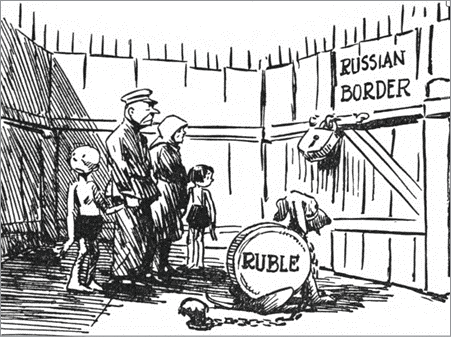
Fig. 4. Illustration by Jay N. Darling for his travelogue Ding Goes to Russia. Source: Darling (1932, p. 74)
The composition draws attention to a young boy, distinguished by his light contrast and inward gaze. While his family looks longingly outward toward the closed gate, he contemplates the enclosure itself. Darling employs the narrative device of the gaze image – “an image with external perspective that shows a character looking at something that cannot be seen in the same image, thus drawing our attention to perception” (Mikkonen, 2017, p. 167). The effect is to expose the condition of political imprisonment through the lens of everyday economic life in the Soviet state.
One of the propaganda clichés circulated in the West concerned the supposed reform of the Soviet family. Investigating this issue, Darling reached a different conclusion: “There certainly was no lack of family life there nor anywhere in Russia, so far as I could discover. And so, another of my preconceived opinions, formed from the sensational reports of Russian marvels, went a-glimmering” (Darling, 1932, p. 48).
The accompanying caricature builds on an ironic misunderstanding. Encountering a large family with children of various ages, the narrator, relying on official information, initially assumes he has found a new form of collective upbringing. The spatial composition underscores the semantic opposition between imagination and reality: the upper section depicts the imagined scenario, while the lower reveals the correction, as the puzzled narrator-persona receives a matter-of-fact explanation (Fig. 5).

Fig. 5. Illustration by Jay N. Darling for his travelogue Ding Goes to Russia. Source: Darling (1932, p. 47)
The self-ironic portrayal of a credulous foreigner serves several functions. First, the metaleptic shift that recasts the narrator as a caricatured character elevates a mundane encounter to a symbolic level, intensifying its meaning. Second, the naïveté inscribed in his expression and posture signifies Western perceptions of the Soviet Other. Thus, the critique of propaganda clichés is not detached or speculative but grounded in personal experience of disappointment, making it more persuasive to the audience.
Darling employs autofictional strategies within a documentary text. However, in contrast to Rogers, he avoids visualising imaginary episodes involving the narrator, so as not to undermine his position as researcher and expositor of illusions. Paradoxically, even when fictionalising strategies appear, they work to reveal hidden truths. A striking instance is Darling’s depiction of the Dnipro Hydroelectric Station (DniproHES) in Zaporizhzhia – one of the flagship projects of the first Five-Year Plan, heavily promoted to foreign visitors. Darling devotes several cartoons to this site, insisting, verbally, that most workers sacrificed themselves not for the regime’s ideological ideals but for personal material gain. The visual counterpart transposes this claim into fiction: the workers are shown cheerfully fishing instead of performing backbreaking labour (Fig. 6).
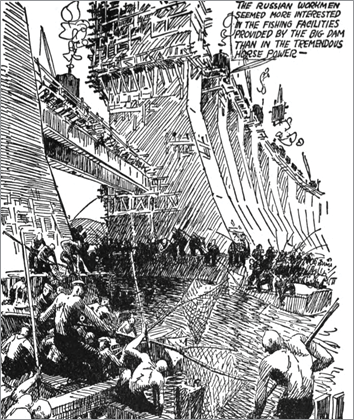
Fig. 6. Illustration by Jay N. Darling for his travelogue Ding Goes to Russia. Source: Darling (1932, p. 149)
Rather than the heroic iconography of shock labour common in Soviet propaganda, Darling offers a counter-image. In the foreground, half-dressed men bend eagerly over their nets, indifferent to the monumental dam looming behind them. This subversive caricature undermines official representations of industrial progress. Fishing symbolises the workers’ yearning for ordinary human pleasures – rest, leisure, conveniences – absent under Soviet conditions. The image constitutes an imaginary rebellion against the state’s demand that individuals serve as mere “cogs” in the machinery of modernity.
The figure of the Soviet citizen in Darling’s text is rendered in generalised, uniform terms, in line with cartoon conventions. Collective portraits of workers emphasise sameness – identical clothing, facial expressions, and gestures. Yet Darling makes these portraits eloquent. As Mikkonen (2017, p. 192) has noted, the tension between the categories of a “type-like individual” and an “individual-like type” is a key dynamic of visual narrative. Moreover, visual narration employs various techniques to produce more or less personal perspectives. Darling’s angle and framing influence the viewer’s relation to the scene. When the focus moves closer to a character who suddenly acquires individual features and stands out from the surrounding figures, the effect is metaleptic: the character is brought nearer to the reader, foregrounding the author’s subjective stance and shaping the work’s conceptual message.
One episode highlights this effect with particular force. Darling addresses a theme painfully familiar to Americans of the Depression era – unemployment – and situates it within the Soviet context of compulsory labour. “With a whole nation living in medieval poverty and trying to catch up to the Twentieth Century, certainly there is work for everybody, and practically everyone who cares to is working. They have to, or starve” (Darling, 1932, p. 159). The narrator urges his readers to abandon utopian fantasies about the Soviet experiment. An unsigned illustration accompanies these words. It depicts a group of men and women, evidently industrial workers, rendered with typical signs of fatigue and indifference (Fig. 7). However, one figure, sharply highlighted and in close-up, acquires distinctive features. Though part of the collective in the background, he breaks free from type-like sameness. Darling thus demonstrates that uniformity dissolves at close range – when one shifts attention from the millions to the fate of an individual.
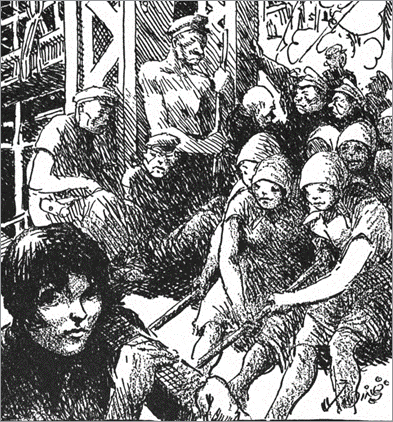
Fig. 7. Illustration by Jay N. Darling for his travelogue Ding Goes to Russia. Source: Darling (1932, p. 158)
Here, too, the cartoonist employs the gaze image. This time, the character looks directly at the viewer, creating a powerful emotional effect. Kress and van Leeuwen (2006, pp. 126–127) define such images as “demand” pictures that intensify interaction between representation and spectator. The figure seems to cast an incidental glance at the viewer, establishing immediate visual contact – a technique that conveys situatedness and authenticity. The activation of the image is so strong that it produces an ontological metalepsis: the character appears to cross from the animated world into the real one. The viewer perceives him as a living person, capable of questioning his own life and future – undermining belief in propagandistic fictions while reinforcing trust in the reality conveyed by the narrative.
Conclusion
Metalepsis is a figure usually associated with fiction, operates just as powerfully in non-fiction, where it destabilises truth claims only to rebuild them on new grounds. By crossing the boundary between the factual and the fictional, caricature and cartoon make the constructedness of propaganda visible while simultaneously intensifying the referential force of the travel narrative.
The analysis of Rogers’s and Darling’s travelogues demonstrates that metalepsis, far from being limited to fiction, can be a productive tool in non-fiction discourse. Rogers’s metaleptic humour turns caricature into a device of estrangement: by laughing at himself and at the Soviet Other, he invites his readers to perceive the distance between American expectations and Soviet realities. Darling’s travelogue develops the same device along a different trajectory. Visual metalepsis highlights contradictions between Soviet ideology and lived experience. These fictionalised moments do not undermine factuality but sharpen it, dismantling utopian myths and shifting caricature from satire to tragedy.
Taken together, the two travelogues demonstrate that metalepsis in non-fiction performs a twofold task: it undermines the illusion of unmediated truth while simultaneously reinforcing credibility through paradoxical acts of fictionalisation. The interplay between word and image, humour and critique, reveals how multimodal travel writing negotiates between the real, the imaginary, and the fictional. In this negotiation, metalepsis is a key device for deconstructing ideological fictions and foregrounding the traveller-narrator’s interpretive role.
These findings suggest that metalepsis in non-fiction performs a dual function. On the one hand, it destabilises claims to unmediated truth, revealing the constructedness of narrative and the ideological filters that shape perception. On the other hand, it reinforces credibility by activating humour, irony, and satire as tools for critical engagement. More broadly, they show that non-fiction, often assumed to resist fictionalisation, relies on metaleptic crossings to interrogate truth, authority, and the limits of representation.
Sources
Darling, J. N., 1932. Ding Goes to Russia. New York and London: Whittlesey House, McGraw-Hill Book Company.
Rogers, W., 1927. There’s Not a Bathing Suit in Russia and Other Bare Facts. New York: A. & C. Boni.
References
Alber, J., 2009. Impossible Storyworlds – and What to Do with Them. Storyworlds: A Journal of Narrative Studies, 1, pp. 79–96. [online]. https://doi.org/10.1353/stw.0.0008.
Alber, J., Bell, A., 2012. Ontological Metalepsis and Unnatural Narratology. Journal of Narrative Theory, 42 (2), pp. 166–192. https://doi.org/10.1353/jnt.2012.0005.
Dodds, K., 2010. Popular Geopolitics and Cartoons: Representing Power Relations, Repetition and Resistance. Critical African Studies, 2(4), pp. 113–131. https://doi.org/10.1080/20407211.2010.10530760. [online] Available at: <https://www.tandfonline.com/doi/epdf/10.1080/20407211.2010.10530760?needAccess=true> [Accessed 11 November 2025].
Evans, C. J., 2018. Logic Loops, Metaleptic Muddles and the Narrating Self: How the Interior Hermeneutics of Biblical Narrative Invite Readerly Self-Involvement. PhD thesis, King’s College London. [online] Available at: <https://kclpure.kcl.ac.uk/ws/portalfiles/portal/101968094/2018_Evans_Chris_0939896_ethesis.pdf> [Accessed 11 November 2025].
Feyersinger, E., 2010. Diegetic Short Circuits: Metalepsis in Animation. Animation: An Interdisciplinary Journal, 5 (3), pp. 279–294. https://doi.org/10.1177/1746847710386432.
Fludernik, M., 2003. Scene Shift, Metalepsis, and the Metaleptic Mode. Style, 37 (4), pp. 382–400. [online] Available at: <https://www.jstor.org/stable/10.5325/style.37.4.382?seq=4> [Accessed 11 November 2025].
Genette, G., 1980. Narrative Discourse: An Essay in Method. Ithaca, NY: Cornell University Press.
Hofstadter, D. R., 2007. I Am a Strange Loop. New York: Basic Books.
Jarvis, R., 2023. A Short History of Humour in Travel Writing. Studies in Travel Writing, 26 (1), pp. 1–18. [online]. https://doi.org/10.1080/13645145.2023.2218048. [online] Available at: <https://www.tandfonline.com/doi/full/10.1080/13645145.2023.2218048#d1e277> [Accessed 11 November 2025].
Kleeman, G., 2006. Not Just for Fun: using cartoons to investigate geographical issues. New Zealand Geographer, 62 (2), pp. 144–151. doi: https://doi.org/10.1111/j.1745-7939.2006.00057.x.
Kress, G., van Leeuwen, T., 2006. Reading Images: The Grammar of Visual Design. 2nd edn. London and New York: Routledge. doi: https://doi.org/10.4324/9780203619728.
Kukkonen, K., 2011. Metalepsis in Popular Culture: An Introduction. In: Metalepsis in Popular Culture. Eds. K. Kukkonen, S. Klimek. Berlin and New York: De Gruyter, pp. 1–21.
Lutas, L., 2021. Metalepsis in Different Media. In: Beyond Media Borders: Intermedial Relations among Multimodal Media. Ed. L. Elleström, L. Vol. 2. Berlin and Boston: Palgrave Macmillan, Cham, pp. 149–173. https://doi.org/10.1007/978-3-030-49683-8. [online].
Mikkonen, K., 2017. The Narratology of Comic Art. London and New York: Routledge. [online] Available at: <https://library.oapen.org/handle/20.500.12657/102499> [Accessed 11 November 2025].
Mohlmann, N. K., 2025. The Time Was Now: Paranormal Non-fiction and Hauntological Metalepsis in Nick Redfern’s “The Man-Monkey: The Search for the British Bigfoot”. Life Writing, Advance online publication, pp. 1–14. https://doi.org/10.1080/14484528.2025.2572713.
Pier, J., 2016. Metalepsis. In: The Living Handbook of Narratology. Eds. P. Hühn et al. Hamburg: Hamburg University Press, pp. 326–343. [online]. Available at: <https://hal.science/hal-03885690v1/file/ab_Pier_Metalepsis_2016.pdf> [Accessed 11 November 2025].
Re, V., 2017. The Monster at the End of This Book: Metalepsis, Fandom, and World Making in Contemporary TV Series. In: World Building: Transmedia, Fans, Industries. Amsterdam: Amsterdam University Press, pp. 321–342. https://doi.org/10.5117/9789089647566/ch18.
Ryan, M.-L., 2013. Impossible Worlds and Aesthetic Illusion. In: Immersion and Distance: Aesthetic Illusion in Literature and Other Media (Studies in Intermediality 6). Amsterdam: Rodopi, pp. 131–148.
Saint-Gelais, R., 2011. Fictions transfuges: La transfictionnalité et ses enjeux [Transfuge fictions: Transfiction and its implications]. Paris: Seuil [In French].
Smith, S., Watson, J., 2019. Metalepsis in Autobiographical Narrative. European Journal of Life Writing, 8, pp. 1–27. https://doi.org/10.21827/ejlw.8.35479. [online] Available at: <https://ejlw.eu/article/view/35479/33039> [Accessed 11 November 2025].
Thoss, J., 2011. Unnatural Narrative and Metalepsis: Grant Morrison’s “Animal Man”. In: Unnatural Narratives – Unnatural Narratology. Eds. J. Alber, R. Heinze. Berlin: De Gruyter, pp. 189–209.
Thoss, J., 2015. When Storyworlds Collide: Metalepsis in Popular Fiction, Film and Comics. Leiden and Boston: Brill. https://doi.org/10.1163/9789401212021.
Velikova, R., 2007. Will Rogers’s Indian Humor. Studies in American Indian Literatures, 19 (2), pp. 83–103. https://doi.org/10.1353/ail.2007.0021.
Ware, A. M., 2009. Unexpected Cowboy, Unexpected Indian: The Case of Will Rogers. Ethnohistory, 56 (1), pp. 1–34. https://doi.org/10.1215/00141801-2008-034. [online] Available at: <https://scispace.com/pdf/unexpected-cowboy-unexpected-indian-the-case-of-will-rogers-4rerfyz0d6.pdf> [Accessed 11 November 2025].
Wagner, F., 1996. Glissements et déphasages: Note sur la métalepse narrative [Shifts and phase changes: A note on narrative metalepsis]. Poétique, 33 (130), pp. 235–253. [In French].
Wolf, W., 1993. Ästhetische Illusion und Illusionsdurchbrechung in der Erzählkunst: Theorie und Geschichte mit Schwerpunkt auf englischem illusionsstörenden Erzählen [Aesthetic illusion and illusion breaking in narrative art: theory and history with a focus on English illusion-breaking narrative]. Tübingen: Niemeyer [In German].
Wolf, W., 2009. Metareference across media: the concept, its transmedial potentials and problems, main forms and functions. In: W. Wolf, K. Bantleon and J. Thoss, eds. Metareference across Media: Theory and Case Studies. Amsterdam: Rodopi, pp. 1–85. doi: https://doi.org/10.1163/9789042026711_002.