Socialinė teorija, empirija, politika ir praktika ISSN 1648-2425 eISSN 2345-0266
2026, vol. 33, pp. 48–59 DOI: https://doi.org/10.15388/STEPP.2026.33.4
The Importance of Social Connections for Loneliness among Older Adults: The Role of Presence of the Partner in the Household and the Household Size
Antanas Kairys
Vilnius University, Lithuania
antanas.kairys@fsf.vu.lt
https://orcid.org/0000-0001-8082-8016
https://ror.org/03nadee84
Vytautas Jurkuvėnas
Vilnius University, Lithuania
vytautas.jurkuvenas@fsf.vu.lt
https://orcid.org/0000-0002-1480-6895
https://ror.org/03nadee84
Tėja Savelytė
Vilnius University, Lithuania
teja.savelyte@fsf.stud.vu.lt
https://ror.org/03nadee84
Abstract: This study examines how social connectedness relates to loneliness among older adults, by considering household size and partnership status. The study uses data from Wave 9 of the Survey of Health, Ageing and Retirement in Europe (SHARE), which includes 42,253 participants aged 65 and older. A linear regression model with a three-way interaction between social connectedness, household size, and partnership status is used, with loneliness as the dependent variable, while also controlling for gender, chronic illness, functional limitations, and the country of the participants. The results of the study indicate that the protective effect of social connectedness is strongest among individuals living in smaller households without a partner, whereas it is not significant among those living in larger households without a partner. These findings underscore the importance of fostering meaningful social connections, particularly paying attention to older adults living in smaller households or alone and without a partner.
Keywords: loneliness, older adults, social connections, partnership.
Socialinių ryšių svarba vyresnio amžiaus žmonių vienišumui: partnerio buvimo namų ūkyje ir namų ūkio dydžio vaidmuo
Santrauka: Šis tyrimas nagrinėja, kaip socialinis susietumas susijęs su vienišumu vyresnio amžiaus žmonių grupėje, atsižvelgiant į tiriamųjų namų ūkio dydį ir partnerystės statusą. Tyrime naudojami duomenys iš devintosios Europos sveikatos, senėjimo ir išėjimo į pensiją tyrimo (SHARE) bangos. Šiame tyrime dalyvavo 65 metų ir vyresni respondentai (N = 42 253). Tyrimo duomenų analizei taikytas tiesinės regresijos modelis su trijų kintamųjų sąveika: socialinio susietumo, namų ūkio dydžio ir partnerystės statuso, vienišumą naudojant kaip priklausomą kintamąjį, bei kontroliuojant tiriamųjų lytį, lėtines ligas, funkcinius ribotumus ir šalį. Nustatyta, kad socialinis susietumas stipriausiai mažina vienišumą tarp asmenų, gyvenančių mažesniuose namų ūkiuose be partnerio. Taip pat rezultatai rodo, kad tarp tiriamųjų, gyvenančių didesniuose namų ūkiuose be partnerio, socialinio susietumo poveikis nėra reikšmingas. Tyrimo rezultatai pabrėžia prasmingų socialinių ryšių puoselėjimo svarbą, ypač atkreipiant dėmesį į vyresnio amžiaus žmones, kurie gyvena vieni ar mažesniame namų ūkyje bei neturi partnerio.
Pagrindiniai žodžiai: vienišumas, vyresnio amžiaus žmonės, socialinis susietumas, partnerystė.
Received: 2026 04 12. Accepted: 2026 07 09.
Copyright © 2026 Antanas Kairys, Vytautas Jurkuvėnas, Tėja Savelytė. Published by Vilnius University Press. This is an Open Access article distributed under the terms of the Creative Commons Attribution Licence, which permits unrestricted use, distribution, and reproduction in any medium, provided the original author and source are credited.
Introduction
Loneliness is defined as a subjective experience arising from a mismatch between the desired and achieved levels of social contacts. It involves a perception that the desired number or quality of social relationships is lacking (Perlman & Peplau, 1981). A key aspect of loneliness is its subjective nature – as some individuals may not feel lonely despite having few social contacts, whereas others experience loneliness even with a large social network (Coyle & Dugan, 2012). Despite being a subjective experience, loneliness can still be profoundly harmful, as chronic or severe loneliness poses a threat to a person’s psychological health and functioning (Surkalim et al., 2022). Loneliness is particularly prevalent among older adults; around 28.5% of people over the age of 60 report feeling lonely (Chawla et al., 2021). This can be attributed to major life changes in later life, such as retirement, loss, moving, or caregiving responsibilities, which increase the risk of loneliness (Taylor, 2020). Moreover, chronic illnesses accompanied by higher levels of activity and competence limitations are also linked to increased loneliness, as chronic illnesses may impair the maintenance of social contacts (Pinquart & Sorensen, 2001; Iovino et al., 2023).
Although loneliness is a subjective experience, more objective aspects of an individual’s social life, such as social isolation (Cohen-Mansfield et al., 2016), less extensive social networks (Axen et al., 2023; Li & Wang, 2021) and social connectedness, may be associated with loneliness. Social connectedness is described as an experience of belonging and interpersonal closeness. The sense of social connectedness depends on the quality and quantity of relationships and their perceived importance for an individual (Van Bel et al., 2009). When social connectedness is lacking, individuals may experience loneliness and need for companionship (Rook, 1990).
According to socioemotional selectivity theory, as individuals age and their perceived future time becomes more limited, they increasingly prioritize emotionally meaningful relationships over broader, less meaningful social ties (Carstensen et al., 1999; Carstensen, 2021). From this perspective, social relationships in later life are important not merely in terms of their quantity, but also in terms of their emotional significance and closeness. Consequently, the protective role of social connectedness against loneliness may depend on whether older adults have access to close and meaningful ties in their immediate social environment. In this context, the presence of a partner in the household may be especially important, as it may reflect the availability of a close, emotionally significant relationship in everyday life. Similarly, the household size may also be relevant, although more indirectly, insofar as it captures aspects of the individual’s living arrangement and immediate social context. Thus, based on socioemotional selectivity theory, it can be assumed that the presence of a partner in the household, and potentially the household size, may interact with social connectedness and moderate its association with loneliness.
Previous research suggests that such a hypothesis is plausible; however, we were unable to identify a study that would examine the moderating role of both factors simultaneously. Living with a partner has been shown to be an important protective factor against loneliness (Greenfield & Russell, 2011; Štípková, 2021). Living arrangements also appear to matter, particularly because older adults living alone tend to report higher levels of loneliness and lower life satisfaction than those living with others (Cohen-Mansfield et al., 2016; Nagargoje et al., 2022). Therefore, the present study aimed to examine how social connectedness relates to loneliness among older adults while considering household size and partnership status.
Methodology
Participants and procedure
The study utilized data from the Survey of Health, Ageing and Retirement in Europe (SHARE; SHARE-ERIC, 2024). SHARE is longitudinal multidisciplinary study that has been conducted since 2004 in 27 European countries and Israel. It targets individuals aged 50 years and older and employs a stratified probability sampling approach. Data are gathered approximately every two to three years through standardized face-to-face interviews (Börsch-Supan et al., 2013). The final sample consisted of 42,253 participants aged over 64 years (M = 74.79, SD = 7.06), including 18,097 men and 24,156 women. Cases with missing data on key variables were excluded from the analyses. This study selected participants aged 65 and older, as, in most studies, this threshold is considered a convenient and well-established classification when analyzing older age groups (Orimo et al., 2006).
Variables and their measures
In this study, loneliness was measured by The Three-Item Loneliness Scale (Hughes et al., 2004), which is a brief version of the Revised UCLA Loneliness Scale (Russell et al., 1980; Russell et al., 1978) designed to assess indirect feelings of loneliness. It consists of three items – feelings of companionship, being left out, and isolation – which are rated on a three-point Likert scale: from ‘1’ (often) to ‘3’ (hardly ever or never). The total score ranges from ‘3’ (indicating low loneliness) to ‘9’ (indicating high loneliness).
Activity limitations were measured by using the Global Activity Limitation Indicator (GALI). It was created to enable comparisons of health expectancy and disability. It is a single-item global measure that assesses long-term activity limitations (lasting six months or more) related to general health and the activities that individuals normally perform (Robine & Jagger, 2003; Van Oyen et al., 2006).
Social connectedness was measured with the Social Connectedness Scale, which represents a composite indicator based on social network characteristics (Litwin & Stoeckel, 2016). The scale combines five main dimensions of an individual’s social network resources into a single composite measure (Malter & Börsch-Supan, 2017). These dimensions include: the network size (the total number of people named); proximity (the number of network members living within 25 km); contact frequency (the number of people contacted on a weekly basis or more often); emotional closeness (the number of people identified as very or extremely close); and diversity (the number of different types of relationships represented within the network). Higher scores of the scale indicate stronger social network resources, and the total score is transformed to a five-point scale (Gruber et al., 2024).
Chronic illnesses were measured by using one item SHARE questionnaire. The respondents were asked whether they suffer from any long-term illness, health problem, or condition that has troubled them for at least six months or is expected to do so.
Data analysis
The data analysis was performed by using the R (Version 4.4.0) software package. First, all variables were prepared prior to analysis. Both the gender and the partnership status were converted into binary variables: gender (‘0’ = male, ‘1’ = female) and partnership (‘0’ = no partner, ‘1’ = has a partner). The social connectedness (SN) scale was mean-centered. Due to high kurtosis, the household size (HH size) was dichotomized by using the sample median (Median = 2). The participants with a household size of two or fewer people were classified as living in a smaller household (0), and those with more than two members were classified as living in larger households (1). Additionally, the chronic illnesses variable was coded dichotomously (‘0’ = no or one chronic illness, ‘1’ = two or more chronic illnesses). The activity limitations variable was also dichotomized to participants without activity limitations (0) and those with one and more activity limitations (1). Missing data were addressed through listwise deletion, resulting in further analyses based on complete cases only.
Descriptive statistics and bivariate correlations were computed for all study variables. To test the main research question, a linear regression model including three-way interaction terms was estimated, with loneliness as the dependent variable. To further explore significant interaction effects, a simple slopes analysis was performed to examine the relationship between social connectedness and loneliness across all combinations of the household size and partnership status. In addition, Intraclass Correlation Coefficients (ICCs) were computed in order to assess the potential country-level variance. Lastly, multicollinearity diagnostics were carried out to confirm the stability of the regression estimates.
Results
Descriptive statistics and bivariate correlations for all study variables are presented in Table 1.
Loneliness is positively correlated with the gender (r = 0.12, p < .001), age (r = 0.169, p < .001), chronic illness (r = 0.13, p < .001), and functional limitations (r = 0.21, p < .001), indicating that women, older individuals and individuals with poorer health tend to report higher loneliness levels.
Table 1. Descriptive Statistics and Bivariate Correlations Among Study Variables
|
Variable |
M (SD) or |
Correlation coefficient |
|||||||
|---|---|---|---|---|---|---|---|---|---|
|
1 |
2 |
3 |
4 |
5 |
6 |
7 |
8 |
||
|
1. Loneliness |
4.14 (1.50) |
1.000 |
|||||||
|
2. Gender |
Male 18,097 (42.8%) |
.121*** |
1.000 |
||||||
|
3. Chronic illness |
0–1 chronic illness(es) 16,286 (38.5%) |
.134*** |
.054*** |
1.000 |
|||||
|
4. GALI index |
No limitations 19,538 (46.2%) |
.209*** |
.060*** |
.331*** |
1.000 |
||||
|
5. SN scale |
2.06 (0.88) |
-.144*** |
.079*** |
.024*** |
-.028*** |
1.000 |
|||
|
6. Partnership |
No partner 16,068 (38.0%) |
-.252*** |
-.293*** |
-.065*** |
-.100*** |
.108*** |
1.000 |
||
|
7. Age |
74.79 (7.06) |
.169*** |
.044*** |
.146*** |
.210*** |
-.066*** |
-.257*** |
1.000 |
|
|
8. HH size |
≤ median 37,936 (89.8%) |
-.040*** |
-.047*** |
-.010* |
-.003 |
-.011* |
.113*** |
-.088*** |
1.000 |
Note: *p < .05, **p < .01, ***p < .001.
In contrast, loneliness is negatively correlated with social connectedness (r = –0.14, p < .001), the partnership status (r = –0.25, p < .001), and the household size (r = –0.04, p < .001), thereby suggesting that those who are more socially connected, live with a partner, or in larger households tend to feel less lonely.
The mixed-effects model with only the country specified as a random intercept was estimated, and the Intraclass Correlation Coefficient (ICC) was calculated to assess the extent to which loneliness varies between countries (i.e., the proportion of variance attributable to country-level differences). The score of ICC = 0.041 indicated a small country effect; therefore, the data were analyzed by using the fixed-effects model (linear regression with dummy-coded country indicators to account for country-level differences).
A linear regression analysis is shown in Table 2. The overall model is significant, F (38, 42,214) = 219, p < .001, on the grounds of explaining 16% (R2 = 0.165) of the variance in loneliness.
Social connectedness is negatively associated with loneliness (β = –0.16, t = -21.01, p < .001), thus indicating that higher levels of social connectedness predict lower loneliness scores. Among the control variables, being female (β = 0.06, t = 12.38, p < .001), being older (β = 0.07, t = 15.64, p < .001), having chronic illnesses (β = 0.05, t = 9.73, p < .001), and facing activity limitations (β = 0.16, t = 33.68, p < .001) are factors all positively associated with loneliness, whereas having a partner (β = –0.20, t = –39.03, p < .001) and living in a larger household (β = –0.06, t = –6.23, p < .001) are factors linked to lower loneliness levels.
Significant two-way interactions are observed between social connectedness and the household size (β = 0.04, t = 3.39, p < .001), social connectedness and partnership (β = 0.08, t = 10.68, p < .001), and the household size and partnership (β = 0.04, t = 4.56, p < .001). Importantly, the three-way interaction between social connectedness, the household size, and partnership is also significant (β = –0.03, t = –3.14, p = 0.002).
Table 2. Linear regression predicting loneliness results
|
Variable |
B |
β |
t |
p |
|---|---|---|---|---|
|
Intercept |
2.45 |
— |
28.38 |
< .001 |
|
Gender (1 = female) |
0.18 |
0.06 |
12.38 |
< .001 |
|
Chronic illness (1 = 2+ chronic illnesses) |
0.14 |
0.05 |
9.73 |
< .001 |
|
GALI (1 = has limitations) |
0.49 |
0.16 |
33.68 |
< .001 |
|
Age |
0.02 |
0.07 |
15.64 |
< .001 |
|
Social connectedness (SN, centered) |
-0.28 |
-0.16 |
-21.01 |
< .001 |
|
Household size (1 > median (2)) |
-0.29 |
-0.06 |
-6.23 |
< .001 |
|
Partnership (1 = has partner) |
-0.61 |
-0.20 |
-39.03 |
< .001 |
|
Countryᵃ |
– |
– |
– |
– |
|
SN × Household size |
0.19 |
0.04 |
3.39 |
< .001 |
|
SN × Partnership |
0.18 |
0.08 |
10.68 |
< .001 |
|
Household size × Partnership |
0.24 |
0.04 |
4.56 |
< .001 |
|
SN × Household size × Partnership |
-0.20 |
-0.03 |
-3.14 |
.002 |
Note: R² = 0.165, N = 42,253; a – 27 dummy-coded country variables were included to control for country-level differences; however, their coefficients are omitted from the table for clarity.
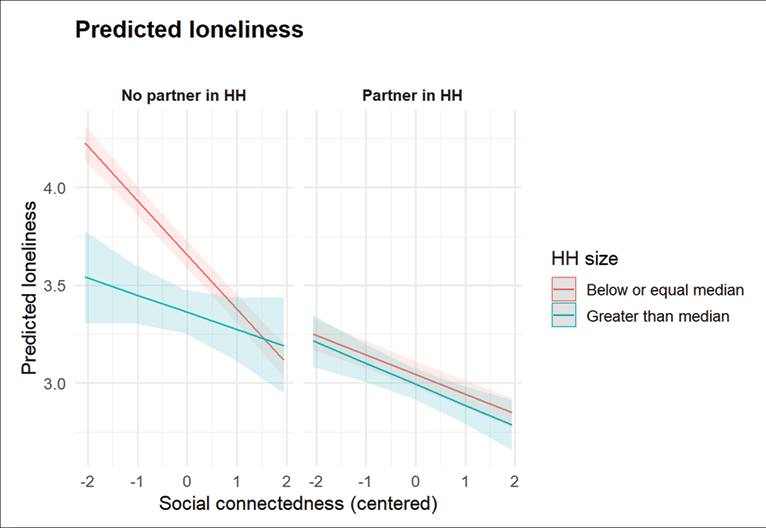
Figure 1. Interaction between social connectedness, household size, and partnership status in predicting loneliness
Both Figure 1 and the simple slopes analysis show that higher social connectedness is associated with lower loneliness among most groups of older adults, but the strength of this association depends on the household size and the partnership status. The effect is statistically significant and the strongest among those living in smaller households without a partner (b = –0.28), whereas, among those living in larger households without a partner, the association is not statistically significant (b = –0.09). For individuals living with a partner, the negative association between social connectedness and loneliness remains significant both in smaller (b = –0.10) and larger households (b = –0.11).
Discussion
The present study aimed to examine how social connectedness relates to loneliness among older adults, while taking into account the household size and the partnership status, thereby potentially contributing to the further development of socioemotional selectivity theory. The results show that social connections are significantly associated with lower levels of loneliness among older adults, regardless of the household size or the partnership status, although the strength of this effect varies across groups. Social connectedness was important for both partnered and unpartnered individuals, thus highlighting the value of maintaining social relationships in later life. However, the findings of this study suggest that the link between loneliness and social connectedness is complex. This complexity may be explained by the fact that the extent to which social relationships reduce loneliness depends on the types of social relationships that individuals maintain, such as relationships with a partner, friends, children or other family members (Chen & Feeley, 2014).
The strongest effect of social connectedness was observed among individuals living in smaller households and without a partner. These findings suggest that limited opportunities for everyday interaction with household members make external social relationships particularly important in compensating for lack of emotional closeness. Previous research has shown that interactions with a supportive spouse can protect against loneliness through emotional closeness and daily companionship (Pinquart & Sörensen, 2001; Norlin et al., 2025). As a result, when such relationships are absent, external social networks become more valuable. There is evidence that having a supportive partner and living with others are important factors in reducing loneliness in older adults (Norlin et al., 2025; Carrasco et al., 2024). However, the results of this study indicate that social connectedness was not significantly associated with reduced loneliness among older adults living in larger households without a partner. One possible explanation is that the presence of other household members, such as children or relatives, may already provide some degree of interpersonal contact, which could make external social relationships less important in reducing loneliness. This interpretation is consistent with previous research highlighting that living with others provides greater access to social engagement, while individuals living alone may be more prone to feelings of isolation and loneliness (Cohen-Mansfield et al., 2016; Yeh & Lo, 2004). It is of importance to note that the results may be somewhat biased, as the loneliness scale included items concerning feelings of isolation and therefore, to some extent, it also captures aspects of social isolation. The household size and the presence of a partner in the household should also be interpreted cautiously, as the quality of the relationship was not measured, and therefore there is no information if the relationship is emotionally close, supportive, distant, or conflictual. To sum up, this type of households may require further investigation, as the absence of a partner combined with living in a large household might indicate different social or emotional dynamics not captured by the present analysis. This study builds on socioemotional selectivity theory (Carstensen et al., 1999; Carstensen, 2021) by exploring whether the link between social connectedness and loneliness in later life is related to the immediate living context (the presence of a partner and the household size). In doing so, it sheds light on when emotionally meaningful ties within the household may be particularly important, and when ties beyond the household may be comparatively more salient.
In addition to these interaction effects, several other predictors were significantly associated with loneliness. Older adults reporting activity limitations or having chronic illnesses experienced higher levels of loneliness. This finding is consistent with previous research showing that poor health and functional impairments restrict older adults’ ability to engage in social activities, thereby increasing the risk of isolation and loneliness (Cohen-Mansfield et al., 2016; Barlow et al., 2015). Gender differences were also observed, with women reporting slightly higher loneliness scores than men. According to Cohen-Mansfield et al. (2016), this may be partly explained by women’s longer life expectancy, which increases the likelihood of losing social connections over time. As in other studies (Ward et al., 2019), age was also a significant predictor of loneliness, with older individuals reporting higher levels of loneliness.
Taken together, these findings suggest that social connectedness may play a particularly important protective role in older adulthood. Strengthening meaningful social relationships and promoting social participation may therefore help reduce feelings of isolation among older individuals. An important contribution of the present study to the existing literature is that it provides additional evidence that the association between social connectedness and loneliness differs across households of different compositions. Thus, particular attention should be paid to older adults living in smaller households and without a partner. Accordingly, this group may be considered a priority target for interventions, as it may benefit most from efforts to strengthen social ties outside the household.
Several limitations of the study should be noted. First, after dichotomizing the household size, most participants lived in smaller households (two persons or fewer), while only a small proportion lived in larger ones. This imbalance may have reduced the statistical power for the larger-household subgroup and thus limited the generalizability of findings to this population. Second, the measure of social connectedness was not entirely independent of the household composition. As it was constructed from multiple components, including the geographic proximity and the frequency of contact, the presence of a partner and other household members may have influenced this measure. Although no multicollinearity was detected in the regression analysis, it would be beneficial to replicate the findings by using measures of social connectedness that are less sensitive to the household composition. The measures of the household composition used in this study, namely, the household size and the presence or absence of a partner, do not provide information about the nature of relationships within the household. Therefore, the loneliness situation in households characterized by predominantly conflictual relationships may differ from that in households with supportive relationships. Another limitation is that the number of chronic diseases was coded as ‘0’ = one or no chronic diseases versus ‘1’ = two or more chronic diseases. Although this is a common coding approach in ageing research, which primarily indicates multimorbidity, there may be additional differences between individuals who have no chronic diseases and those who have one chronic disease.
Acknowledgement
This paper uses data from SHARE Wave 9 (DOI: 10.6103/SHARE.w9.900) see Börsch-Supan et al. (2013) for methodological details. The SHARE data collection has been funded by the European Commission, DG RTD through FP5 (QLK6-CT-2001-00360), FP6 (SHARE-I3: RII-CT-2006-062193, COMPARE: CIT5-CT-2005-028857, SHARELIFE: CIT4-CT-2006-028812), FP7 (SHARE-PREP: GA N°211909, SHARE-LEAP: GA N°227822, SHARE M4: GA N°261982, DASISH: GA N°283646) and Horizon 2020 (SHARE-DEV3: GA N°676536, SHARE-COHESION: GA N°870628, SERISS: GA N°654221, SSHOC: GA N°823782, SHARE-COVID19: GA N°101015924) and by DG Employment, Social Affairs & Inclusion through VS 2015/0195, VS 2016/0135, VS 2018/0285, VS 2019/0332, VS 2020/0313, SHARE-EUCOV: GA N°101052589 and EUCOVII: GA N°101102412. Additional funding from the German Federal Ministry of Education and Research (01UW1301, 01UW1801, 01UW2202), the Max Planck Society for the Advancement of Science, the U.S. National Institute on Aging (U01_AG09740-13S2, P01_AG005842, P01_AG08291, P30_AG12815, R21_AG025169, Y1-AG-4553-01, IAG_BSR06-11, OGHA_04-064, BSR12-04, R01_AG052527-02, R01_AG056329-02, R01_AG063944, HHSN271201300071C, RAG052527A) and from various national funding sources is gratefully acknowledged (see www.share-eric.eu).
Author Contributions
Antanas Kairys: Conceptualization, methodology, supervision, writing – original draft preparation, writing – review and editing.
Vytautas Jurkuvėnas: Methodology, writing – review and editing.
Tėja Savelytė: Conceptualization, writing – original draft preparation.
References
Axén, A., Taube, E., Sanmartin Berglund, J., & Skär, L. (2023). Loneliness in Relation to Social Factors and Self-Reported Health Among Older Adults: A Cross-Sectional Study. Journal of Primary Care & Community Health, 14, Article 21501319231198644. https://doi.org/10.1177/21501319231198644
Barlow, M. A., Liu, S. Y., & Wrosch, C. (2015). Chronic illness and loneliness in older adulthood: The role of self-protective control strategies. Health Psychology, 34(8), 870–879. https://doi.org/10.1037/hea0000182
Börsch-Supan, A., Brandt, M., Hunkler, C., Kneip, T., Korbmacher, J., Malter, F., Schaan, B., Stuck, S., & Zuber, S. (2013). Data Resource Profile: The Survey of Health, Ageing and Retirement in Europe (SHARE). International Journal of Epidemiology, 42(4), 992–1001. https://doi.org/10.1093/ije/dyt088
Carrasco, P. M., Crespo, D. P., García, A. I. R., Ibáñez, M. L., Rubio, B. M., & Montenegro-Peña, M. (2024). Predictive factors and risk and protection groups for loneliness in older adults: A population-based study. BMC Psychology, 12(1), Article 238. https://doi.org/10.1186/s40359-024-01708-7
Carstensen, L. L. (2021). Socioemotional Selectivity Theory: The Role of Perceived Endings in Human Motivation. The Gerontologist, 61(8), 1188–1196. https://doi.org/10.1093/geront/gnab116
Carstensen, L. L., Isaacowitz, D. M., & Charles, S. T. (1999). Taking time seriously: A theory of socioemotional selectivity. American Psychologist, 54(3), 165–181. https://doi.org/10.1037/0003-066X.54.3.165
Chawla, K., Kunonga, T. P., Stow, D., Barker, R., Craig, D., & Hanratty, B. (2021). Prevalence of loneliness amongst older people in high-income countries: A systematic review and meta-analysis. PLOS ONE, 16(7), Article e0255088. https://doi.org/10.1371/journal.pone.0255088
Chen, Y., & Feeley, T. H. (2014). Social support, social strain, loneliness, and well-being among older adults: An analysis of the Health and Retirement Study*. Journal of Social and Personal Relationships, 31(2), 141–161. https://doi.org/10.1177/0265407513488728
Cohen-Mansfield, J., Hazan, H., Lerman, Y., & Shalom, V. (2016). Correlates and predictors of loneliness in older-adults: A review of quantitative results informed by qualitative insights. International Psychogeriatrics, 28(4), 557–576. https://doi.org/10.1017/S1041610215001532
Coyle, C. E., & Dugan, E. (2012). Social Isolation, Loneliness and Health Among Older Adults. Journal of Aging and Health, 24(8), 1346–1363. https://doi.org/10.1177/0898264312460275
Greenfield, E. A., & Russell, D. (2011). Identifying Living Arrangements That Heighten Risk for Loneliness in Later Life: Evidence From the U.S. National Social Life, Health, and Aging Project. Journal of Applied Gerontology, 30(4), 524–534. https://doi.org/10.1177/0733464810364985
Hughes, M. E., Waite, L. J., Hawkley, L. C., & Cacioppo, J. T. (2004). A Short Scale for Measuring Loneliness in Large Surveys: Results From Two Population-Based Studies. Research on Aging, 26(6), 655–672. https://doi.org/10.1177/0164027504268574
Iovino, P., Vellone, E., Cedrone, N., & Riegel, B. (2023). A Middle-Range Theory of Social Isolation in Chronic Illness. International Journal of Environmental Research and Public Health, 20(6), Article 4940. https://doi.org/10.3390/ijerph20064940
Li, H., & Wang, C. (2021). The Relationships Among Structural Social Support, Functional Social Support, and Loneliness in Older Adults: Analysis of Regional Differences Based on a Multigroup Structural Equation Model. Frontiers in Psychology, 12, Article 732173. https://doi.org/10.3389/fpsyg.2021.732173
Litwin, H., & Stoeckel, K. J. (2016). Social Network, Activity Participation, and Cognition: A Complex Relationship. Research on Aging, 38(1), 76–97. https://doi.org/10.1177/0164027515581422
Nagargoje, V. P., James, K. S., & Muhammad, T. (2022). Moderation of marital status and living arrangements in the relationship between social participation and life satisfaction among older Indian adults. Scientific Reports, 12(1), Article 20604. https://doi.org/10.1038/s41598-022-25202-5
Norlin, J., McKee, K. J., Lennartsson, C., & Dahlberg, L. (2025). Quantity and quality of social relationships and their associations with loneliness in older adults. Aging & Mental Health, 29(7), 1198–1208. https://doi.org/10.1080/13607863.2025.2460068
Orimo, H., Ito, H., Suzuki, T., Araki, A., Hosoi, T., & Sawabe, M. (2006). Reviewing the definition of “elderly.” Geriatrics & Gerontology International, 6(3), 149–158. https://doi.org/10.1111/j.1447-0594.2006.00341.x
Perlman, D., & Peplau, L. A. (1981). Toward a social psychology of loneliness. In S. Duck & R. Gilmour (Eds.), Personal relationships in disorder (pp. 31–56). Academic Press.
Pinquart, M., & Sorensen, S. (2001). Influences on Loneliness in Older Adults: A Meta-Analysis. Basic and Applied Social Psychology, 23(4), 245–266. https://doi.org/10.1207/S15324834BASP2304_2
Robine, J.-M., Jagger, C., & The Euro-REVES Group. (2003). Creating a coherent set of indicators to monitor health across Europe: The Euro-REVES 2 project. European Journal of Public Health, 13(suppl_1), 6–14. https://doi.org/10.1093/eurpub/13.suppl_1.6
Rook, K. S. (1990). Social relationships as a source of companionship: Implications for olderadults’ psychological well-being. In B. R. Sarason, I. G. Sarason, & R. P. Gregory (Eds.), Social support: An interactional view (pp. 219–250). New York: John Wiley.
Russell, D. (2009). Living Arrangements, Social Integration, and Loneliness in Later Life: The Case of Physical Disability. Journal of Health and Social Behavior, 50(4), 460–475. https://doi.org/10.1177/002214650905000406
Russell, D., Peplau, L. A., & Cutrona, C. E. (1980). The revised UCLA Loneliness Scale: Concurrent and discriminant validity evidence. Journal of Personality and Social Psychology, 39(3), 472–480. https://doi.org/10.1037/0022-3514.39.3.472
Russell, D., Peplau, L. A., & Ferguson, M. L. (1978). Developing a Measure of Loneliness. Journal of Personality Assessment, 42(3), 290–294. https://doi.org/10.1207/s15327752jpa4203_11
SHARE-ERIC. (2024). Survey of Health, Ageing and Retirement in Europe (SHARE) Wave 9 [Dataset]. SHARE-ERIC. https://doi.org/10.6103/SHARE.W9.900
Surkalim, D. L., Luo, M., Eres, R., Gebel, K., Van Buskirk, J., Bauman, A., & Ding, D. (2022). The prevalence of loneliness across 113 countries: Systematic review and meta-analysis. BMJ, 376, Article e067068. https://doi.org/10.1136/bmj-2021-067068
Štípková, M. (2021). Marital status, close social network and loneliness of older adults in the Czech Republic. Ageing and Society, 41(3), 671–685. https://doi.org/10.1017/S0144686X19001442
Taylor, H. O. (2020). Social Isolation’s Influence on Loneliness Among Older Adults. Clinical Social Work Journal, 48(1), 140–151. https://doi.org/10.1007/s10615-019-00737-9
Van Bel, D. T., Smolders, K. C. H. J., IJsselsteijn, W. A., & De Kort, Y. A. W. (2009). Social connectedness: concept and measurement. In Ambient Intelligence and Smart Environments (pp. 67–74). IOS Press. https://doi.org/10.3233/978-1-60750-034-6-67
Van Oyen, H., Van Der Heyden, J., Perenboom, R., & Jagger, C. (2006). Monitoring population disability: Evaluation of a new Global Activity Limitation Indicator (GALI). Sozial- Und Präventivmedizin, 51(3), 153–161. https://doi.org/10.1007/s00038-006-0035-y
Ward, M., Layte, R., & Kenny, R. A. (2019). Loneliness, Social Isolation, and their Discordance among Older Adults. Findings from The Irish Longitudinal Study on Ageing (TILDA). The Irish Longitudinal Study on Ageing. https://doi.org/10.38018/TildaRe.2019-03
Yeh, S. C. J., & Lo, S. K. (2004). Living alone, social support, and feeling lonely among the elderly. Social Behavior and Personality: An International Journal, 32(2), 129–138. https://www.doi.org/10.2224/SBP.2004.32.2.129